What Is a Micro Influencer, and Why They Outsell Big Creators
October 5, 2026, 10 min read
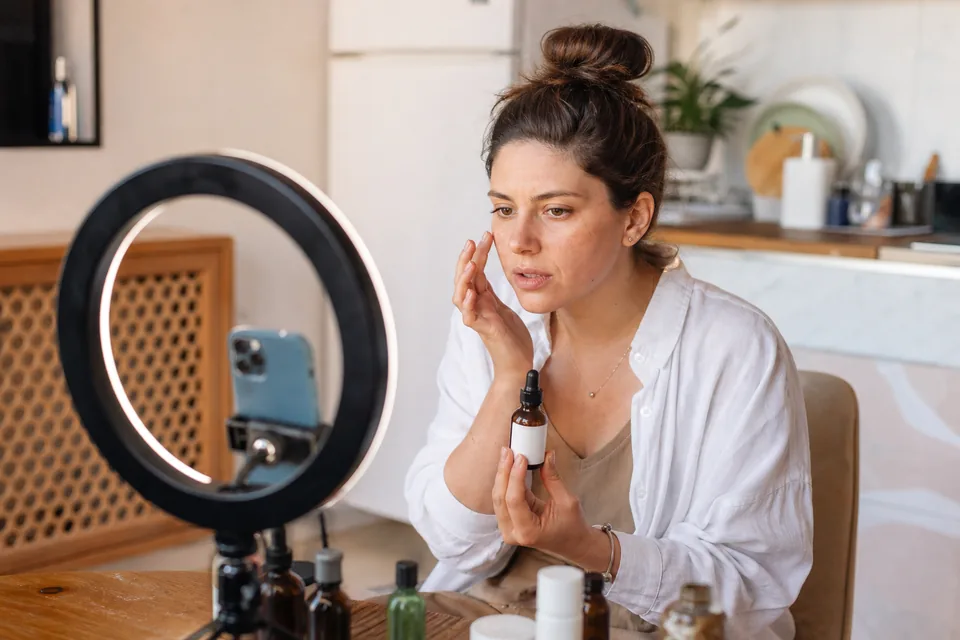
A micro influencer is a social media creator with roughly 10,000 to 100,000 followers who has built trust inside one specific niche, such as trail running, skincare for sensitive skin or home espresso. Their audience is small enough to feel personal, which is why their product recommendations often convert better than those of creators with millions of followers.
On MicroInfluencer we use the wider band: the platform covers nano creators (1,000 to 10,000 followers) and micro creators (10,000 to 100,000) together, so a search runs from 1,000 to 100,000 followers.
That's the short answer. The longer one matters more, because the label alone won't help you run a profitable campaign. Follower count is just the entry ticket. What actually makes a micro influencer valuable to a brand is the relationship they have with the people watching, and that relationship behaves very differently from the broadcast reach of a celebrity account. Below we'll break down how the tiers are defined, why smaller creators so often outsell bigger ones, what they typically cost, and how to find, brief and measure them without guessing.
How influencer tiers are usually defined
There's no official standard, but most marketers use roughly the same brackets. Here's the breakdown you'll see in most briefs and rate discussions.
| Tier | Typical follower range | What they're good at |
|---|---|---|
| Nano | 1,000 to 10,000 | Very close communities, honest reviews, product seeding at scale |
| Micro | 10,000 to 100,000 | Niche authority with enough reach to move real sales |
| Mid tier | 100,000 to 500,000 | Broader reach, more polished production, higher fees |
| Macro | 500,000 to 1,000,000 | Awareness across a wide audience |
| Mega | Over 1,000,000 | Mass reach, cultural moments, celebrity endorsement |
Some teams lump everyone from 1,000 to 100,000 together as "micro." That's fine as long as you remember that a creator with 3,000 followers and one with 80,000 behave differently. If you're weighing the lower end of that range, our breakdown of nano vs micro influencers walks through which tier fits which budget.
Why micro influencers outsell big creators
It sounds backwards. More followers should mean more sales. In practice, though, a lot of brands find that ten micro creators beat one big name on revenue per dollar spent. Here's why that happens.
Trust is concentrated, not diluted
When someone follows a creator with 40,000 followers who reviews budget camping gear, they followed for a reason. They want that creator's opinion on tents and stoves. When that creator says a product is good, it lands like advice from a knowledgeable friend. A celebrity posting about the same tent reads as an ad, because their audience followed them for entertainment, not gear advice.
Engagement holds up better at smaller sizes
As accounts grow, the share of followers who like, comment or save a given post tends to drop. That's a widely observed pattern across platforms, and it makes sense. A small creator answers comments, remembers regulars and talks with their audience rather than at it. Higher engagement usually means the post gets shown to more of the followers the creator actually has, so the effective reach of a micro post can be closer to its follower count than you'd expect.
Audiences are easier to match to a product
A mega creator's audience is a mix of every age, country and interest. A micro creator's audience is often tightly grouped. If you sell gluten free baking mixes in the US, you can find a creator whose followers are mostly US home bakers who avoid gluten. That precision cuts waste. You're not paying to reach millions of people who'll never buy.
The risk is spread across many creators
Put your whole budget into one big creator and you're betting everything on one post on one day. If it flops, you've learned almost nothing. Spread the same budget across 20 micro creators and you get 20 tests. A few will underperform, a few will surprise you, and you'll come out with data on which angles, formats and audiences actually sell.
Their content works beyond the post
Micro creators usually make content that looks native to the platform, not like a studio commercial. That style tends to perform well when you reuse it in your own ads, on product pages or in email, as long as your agreement covers usage rights. Many brands treat micro collaborations as a source of authentic creative as much as a sales channel. If that's your main goal, it's worth reading about working with UGC creators as well.
A worked example with hypothetical numbers
Let's make this concrete. Say a skincare brand has $10,000 for one month of creator marketing. These figures are illustrative, not benchmarks, but the logic is what matters.
Option A, one big creator. A creator with 1.2 million followers charges $10,000 for one video. The video gets 150,000 views. With a discount code, 180 people buy at an average order of $45, which is $8,100 in revenue. Return on spend is below break even.
Option B, twelve micro creators. The brand pays twelve skincare creators with 25,000 to 70,000 followers an average of $700 each, plus $1,600 in product. Combined, the posts reach 260,000 views. Because each audience is tightly matched, conversion is higher, and 410 people buy at $45, which is $18,450 in revenue. Better yet, three of those twelve creators drove most of the sales, so the brand knows exactly who to rebook next month.
Option B isn't guaranteed to win every time. But it gives you more chances to win and much better information for the next round. That learning loop is the real advantage.
When a big creator still makes sense
Micro influencers aren't the right answer for everything. Bigger creators are worth considering when:
- You're launching something with a fixed date and need a large burst of awareness in one moment.
- Your product appeals to almost everyone, so tight audience matching adds little.
- You need a recognizable face for brand credibility, for example in a category where trust is built through association with well known names.
- You already have a strong micro program and want to amplify proven messaging.
For most direct to consumer brands focused on sales, though, micro creators are the core of the program and big names are an occasional add on.
How much micro influencers cost
Rates vary a lot by platform, niche, country and deliverable. A rough pattern most marketers recognize is that pricing rises with follower count, video costs more than a static post, and creators in high value niches like finance or B2B software charge more than lifestyle creators of the same size. Many micro creators also accept product plus a smaller fee, or a commission on sales.
Common payment structures include:
- Flat fee per deliverable. Simple and predictable. Good for first collaborations.
- Product only (gifting). Works best with smaller creators who genuinely want the product. Expect fewer guaranteed posts.
- Commission or affiliate. The creator earns a percentage of each sale through their link or code. Lower risk for you, more upside for strong performers.
- Hybrid. A modest flat fee plus commission. Often the fairest deal for both sides.
When you plan the budget, keep creator fees, product and shipping in separate lines, and add any tool costs on top (ours are listed on the pricing page).
How to find the right micro influencers
Finding creators is easy. Finding the right ones takes a process. Here's a checklist that works whether you're searching manually or using a creator database.
- Define the buyer, not just the niche. "Fitness" is too broad. "Women in their 30s doing home strength training in the US" is a target you can match.
- Filter by country and platform first. A great creator whose audience is mostly in another country won't help if you only ship domestically.
- Look at engagement, then read the comments. A healthy engagement rate is a good start. Real comments that ask questions about products are even better. Generic emoji strings and "nice pic" replies are a warning sign.
- Check recent sponsored posts. How many ads do they run? If every third post is a sponsorship, their audience may be tuning out.
- Review content quality and tone. Would you be happy putting their video on your product page?
- Look for consistency. Steady posting over the last few months beats one viral spike followed by silence.
- Shortlist more than you need. Expect a portion of creators not to reply. Shortlisting two to three times your target count keeps the campaign on schedule.
If you want to search by country, niche, platform, follower range and engagement in one place, you can find micro influencers with filters rather than scrolling hashtags for hours.
How to reach out and brief them
Micro creators get plenty of lazy pitches. A short, specific message stands out. Here's a simple structure.
Hi Jamie, I loved your recent video on fixing dry patches before makeup, especially the tip about layering. We make a fragrance free barrier cream for sensitive skin and I think your audience would genuinely find it useful. We'd like to send you a full size jar, and if you like it, pay $500 for one video plus a 15 percent commission on sales through your code. No script, just your honest take. Would you be open to it?
Notice what it does. It shows you actually watched their content, explains why the fit makes sense, states the offer clearly and respects their voice. For more variations, see our page on influencer outreach.
Once a creator says yes, send a brief that covers the essentials without micromanaging:
- Key product points (three at most) and anything they must not claim
- Required disclosure, such as tagging the post as an ad or paid partnership
- Deliverables, format and posting window
- Their discount code and tracking link
- Usage rights, if you want to reuse the content in ads
- Payment terms and timing
How to measure whether micro influencers actually sell
Likes and views are nice, but they don't pay the bills. To know if your program works, you need to connect each creator to orders. That means giving every creator a unique discount code and a tracked affiliate link, then matching those to orders in your store.
Track these numbers per creator:
- Total cost, including fee, product value and shipping
- Orders and revenue attributed through code or link
- Cost per order, which is total cost divided by orders
- Return on spend, which is attributed revenue divided by total cost
- New vs returning customers, if your store data allows it
Then rank creators by return, not by reach. The top performers get rebooked, often with a better commission. The bottom group gets a polite thank you. After two or three rounds, you'll have a roster of proven sellers, which is where micro influencer marketing really starts to compound. If you sell through Shopify, our guide on how to track influencer sales in Shopify covers the setup step by step.
Common mistakes to avoid
- Choosing by follower count alone. Audience fit and engagement predict sales better than size.
- Writing a script. Forced scripts sound like ads and kill the trust you're paying for.
- Running one creator and calling it a test. One post is noise. You need enough creators to see patterns.
- Skipping tracking. Without codes and links, you'll never know who sold and who didn't.
- Paying late. Creators talk to each other. Paying on time is the cheapest way to build a reputation that makes future outreach easier.
- Forgetting disclosure. Every paid or gifted post should be clearly marked as such on the platform.
Running a micro influencer program without drowning in spreadsheets
The catch with micro influencers is volume. Twenty creators means twenty conversations, twenty shipments, twenty codes and twenty payouts. That's manageable in a spreadsheet for one campaign, and painful by the third. A dedicated influencer marketing platform keeps search, outreach, gifting, post tracking, sales attribution and payouts in one place, so you can spend your time choosing creators instead of chasing tracking numbers.
MicroInfluencer is built around exactly this workflow, from searching the creator index to ranking creators by the revenue they actually drove. Whatever tool you use, the principle is the same. Start small, measure every creator, keep the sellers and scale what works.
Frequently asked questions
How many followers does a micro influencer have?
A micro influencer usually has between 10,000 and 100,000 followers. Some marketers stretch the lower boundary down to 1,000, but creators under 10,000 are more commonly called nano influencers. MicroInfluencer covers both tiers, from 1,000 to 100,000 followers.
Are micro influencers worth it for small brands?
Yes, micro influencers are often the best fit for small brands because fees are lower and audiences are easier to match to a specific product. You can test several creators with a modest budget and keep only the ones who drive sales.
Do micro influencers work for free?
Some micro influencers will post in exchange for product, but most expect a fee, a commission or both for guaranteed content. Gifting works best when the creator genuinely wants the product and there's no obligation to post.
What's a good engagement rate for a micro influencer?
There's no universal number, but a micro creator whose engagement is clearly above the typical level for their platform and niche is usually a good sign. Read the comments too, because real questions about products matter more than raw percentages.
How do I know if a micro influencer drove sales?
Give each creator a unique discount code and tracked link, then match those to orders in your store. Comparing attributed revenue to the total cost of each collaboration shows which creators actually earned their fee.